


Joint Injections Clinic in Memorial Drive-Stone Mountain, GA
Overcoming the debilitating effects of persistent arthritis and severe joint stiffness requires targeted therapies that deliver immediate, localized relief. At Lifeline Primary Care, Dr. Aziz Pirani, MD, and Dr. Safia Pirani, MD, expertly administer joint injections designed to reduce inflammation and restore your natural range of motion quickly. Their precise and gentle technique ensures a comfortable treatment experience, empowering you to effectively manage pain and confidently reclaim your active lifestyle. For more information, contact us or request an appointment online. We are conveniently located at 4910 Memorial Drive, Suite A, Stone Mountain, GA 30083.
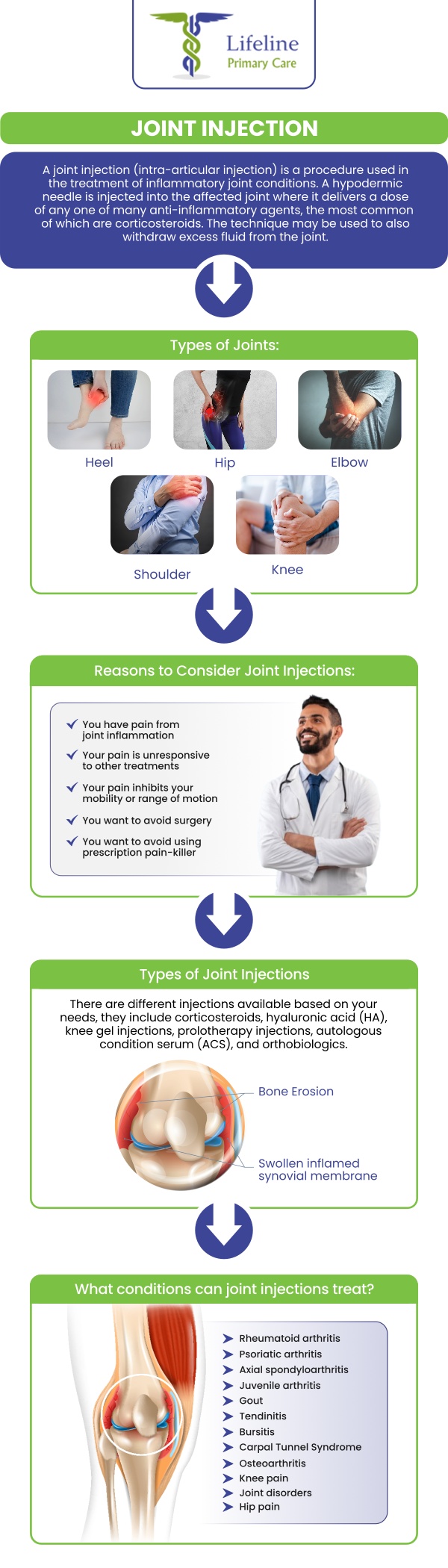
Table of Contents:
What are joint injections and how do they work?
How can joint injections help with pain relief?
What conditions are treated with joint injections?
Are joint injections safe for all patients?
What Can You Expect From Joint Injections at Lifeline Primary Care?
Joint injections are a procedure in which our experienced medical providers inject medication directly into the affected joint to relieve pain, reduce inflammation, and enhance mobility.
Joint injections are a highly effective solution for patients suffering from conditions such as osteoarthritis, rheumatoid arthritis, gout, bursitis, and other inflammatory or degenerative joint diseases. Commonly treated areas include the knee, shoulder, hip, and the smaller joints of the hands and feet.
Our team at Lifeline Primary Care uses medications such as corticosteroids, which are powerful anti-inflammatory agents, and local anesthetics for immediate pain relief. Depending on your unique needs, we may also recommend hyaluronic acid to lubricate the joint to promote healing. To ensure safety and precision, we often use ultrasound guidance during the procedure.
Joint injections deliver targeted medication directly to the source of pain and inflammation, often providing faster and more effective relief compared to oral medications. The benefits of a joint injection can last anywhere from several weeks to several months, depending on your condition and the medication used.
Joint injections are often part of an individualized treatment plan that may also include physical therapy, lifestyle changes, and oral medications. While injections can be repeated if necessary, we closely monitor each patient to minimize potential side effects and ensure optimal results.
Joint injections are a minimally invasive treatment option to help relieve pain and inflammation for our patients struggling with joint conditions. Our experienced healthcare providers commonly use joint injections to treat osteoarthritis, rheumatoid arthritis, bursitis, gout, and other inflammatory joint diseases.
During your visit, our team will carefully assess your condition and, if appropriate, may recommend joint injections. This procedure involves injecting medication—typically a combination of corticosteroids and local anesthetics—directly into the affected joint. The corticosteroids work to reduce inflammation and swelling, while the local anesthetic provides rapid, temporary pain relief for immediate comfort.
By targeting the source of pain directly, joint injections can offer more immediate and localized relief than oral medications. Depending on your unique condition and response, the benefits of joint injections can last from several weeks to a few months.
Our providers are highly trained in performing joint injections safely and effectively. While the procedure is generally safe, as with any medical treatment, there are potential risks, including infection or allergic reaction. At Lifeline Primary Care, your safety is our top priority, and we will discuss both the benefits and risks to ensure you are well-informed.
At Lifeline Primary Care, we are committed to providing comprehensive solutions for patients experiencing joint pain, inflammation, and limited mobility.
Common Conditions Treated with Joint Injections at Lifeline Primary Care:
• Osteoarthritis: This is one of the most frequent reasons our patients seek joint injections, especially for knees, hips, shoulders, and small joints like those in the hands and feet. When oral medications or physical therapy are not enough to relieve your discomfort, targeted injections can help reduce inflammation and restore your quality of life.
• Rheumatoid Arthritis and Other Inflammatory Arthritides: Conditions such as rheumatoid arthritis, psoriatic arthritis, and gout often benefit from corticosteroid injections. These can quickly decrease inflammation within the affected joint, improving both function and comfort.
• Bursitis and Tendinitis: If you’re dealing with persistent pain from bursitis or tendinitis that hasn’t responded to conservative treatments like rest and physical therapy, our providers may recommend targeted joint injections to alleviate your symptoms.
• Frozen Shoulder (Adhesive Capsulitis): For patients with frozen shoulder, joint injections can reduce pain and improve movement, supporting the recovery process.
• Diagnostic Purposes: In some cases, our medical team uses joint injections to help pinpoint the source of joint pain. By observing your response to anesthetic medications, we can develop a more accurate and effective treatment plan.
Joint injections are a proven treatment for a variety of musculoskeletal conditions, such as arthritis, bursitis, and other sources of joint pain and inflammation. Many of our patients experience significant relief and improved mobility following these procedures. However, ensuring your safety and well-being is always our top priority, and joint injections are not appropriate for everyone.
Our experienced providers at Lifeline Primary Care will thoroughly review your medical history and current medications before recommending a joint injection.
You may be advised to avoid this procedure if you have:
• Active infections at or near the injection site, or elsewhere in your body, as joint injections can increase the risk of spreading infection.
• Bleeding disorders or use of blood-thinning medications, which may increase the risk of bleeding or bruising.
• Allergies to certain medications such as corticosteroids or local anesthetics used in joint injections.
• Poorly controlled diabetes, since corticosteroid injections can temporarily raise blood sugar levels.
Additionally, frequent or repeated injections in the same joint can potentially cause cartilage damage, so our providers will work with you to limit the number of injections and explore alternative treatment options as needed.
Personalized Evaluation at Lifeline Primary Care
Before proceeding with any joint injection, our Lifeline Primary Care team will conduct a comprehensive evaluation tailored to your unique health needs. We encourage you to share your full health history and any concerns with us, so together we can determine if a joint injection is the safest and most effective option for your condition.
During a joint injection visit at Lifeline Primary Care, Dr. Aziz Pirani, MD, and Dr. Safia Pirani, MD, first review your symptoms, medical history, pain location, and range of motion. They explain the purpose of the injection, the area being treated, and the aftercare steps you should follow. The procedure is performed in the clinic and is planned according to your individual joint concern and overall health.
After the injection, you may receive instructions about activity, temporary soreness, and symptoms that should be reported. Follow-up care helps Dr. Aziz Pirani and Dr. Safia Pirani assess your response and determine whether additional treatment, exercises, or further evaluation is needed. Patients from Stone Mountain, GA, can receive attentive, personalized joint care focused on improving comfort and supporting easier movement. For more information, contact us or request an appointment online. We are conveniently located at 4910 Memorial Drive, Suite A, Stone Mountain, GA 30083. We serve patients from Stone Mountain GA, Scottdale GA, Decatur GA, Tucker GA, Redan GA, Gresham Park GA, Lilburn GA, and surrounding cities.
Check Out Our 5 Star Reviews


Additional Services You May Need
• Sports Physical Exam
• School Physical Exam
• X-Ray
• Foreign Body Removal
• Minor Surgeries
• Confidential STD Screening
• Allergy Testing
• Immigration Physical Exams
• IUD Insertion
• DOT Physical Exam
• Knee Gel Injections
• Chronic Care Management
• Women’s Health
• Vitamin B12 Injections
• Myers Cocktail IV Therapy
• Weight Management
• Suturing Clinic
• Incision and Drainage
• Dermatological Procedures
• Skin Tag Removal
• Toenail Removal
• Biopsies
• Lab Services
• Lead Screening
• Hormone Replacement (Pellet) Therapy
• TB Screening
• Hearing/Vision Test
• EKG Services
• Spirometry Testing
• Echocardiograms
• Ultrasounds
• ABI (Circulation Test)
• Urine Drug Testing
• Nerve Conduction Studies
• Annual Physicals
• Immunotherapy
• Neuro Scans
• Employment Physicals
• Medicare Wellness Exams
• VAT/ENG Studies
• Autonomic Nervous System Scans
• Nuclear Scans
• Acute Care
• Smoking Cessation
• Immunizations
• Joint Injections
• Vaccinations
• Covid-19 Vaccines
• Nexplanon
• Primary Care
• Flu Shot

Additional Services
You May Need
• Sports Physical Exam
• School Physical Exam
• Primary Care
• X-Ray
• Foreign Body Removal
• Minor Surgeries
• Confidential STD Screening
• Allergy Testing
• Immigration Physical Exams
• IUD Insertion
• DOT Physical Exam
• Knee Gel Injections
• Chronic Care Management
• Women’s Health
• Vitamin B12 Injections
• Myers Cocktail IV Therapy
• Weight Management
• Suturing Clinic
• Incision and Drainage
• Dermatological Procedures
• Skin Tag Removal
• Toenail Removal
• Biopsies
• Lab Services
• Lead Screening
• TB Screening
• Hearing/Vision Test
• EKG Services
• Spirometry Testing
• Echocardiograms
• Ultrasounds
• ABI (Circulation Test)
• Urine Drug Testing
• Nerve Conduction Studies
• Annual Physicals
• Immunotherapy
• Neuro Scans
• Employment Physicals
• Medicare Wellness Exams
• VAT/ENG Studies
• Autonomic Nervous System Scans
• Nuclear Scans
• Acute Care
• Smoking Cessation
• Immunizations
• Joint Injections
• Vaccinations
• Covid-19 Vaccines
• Nexplanon
• Hormone Replacement (Pellet) Therapy
• Flu Shot




 Send Text
 How May I Help You?