


How Often Should I Get an Echocardiogram for Heart Monitoring in Norcross, GA?
The frequency of echocardiograms for heart monitoring in Norcross, GA depends on your heart health and risk factors. For many people with stable conditions, follow‑up echoes may be done every 1–2 years, while more frequent monitoring is recommended if symptoms change or if you have significant heart disease. Dr. Aziz Pirani and Dr. Safia Pirani at Lifeline Primary Care tailor recommendations to your individual needs to ensure you get the right care at the right time. For more information, contact us or request an appointment online. We are conveniently located at 6328 Oakwood Circle, Suite A, Norcross, GA 30093.
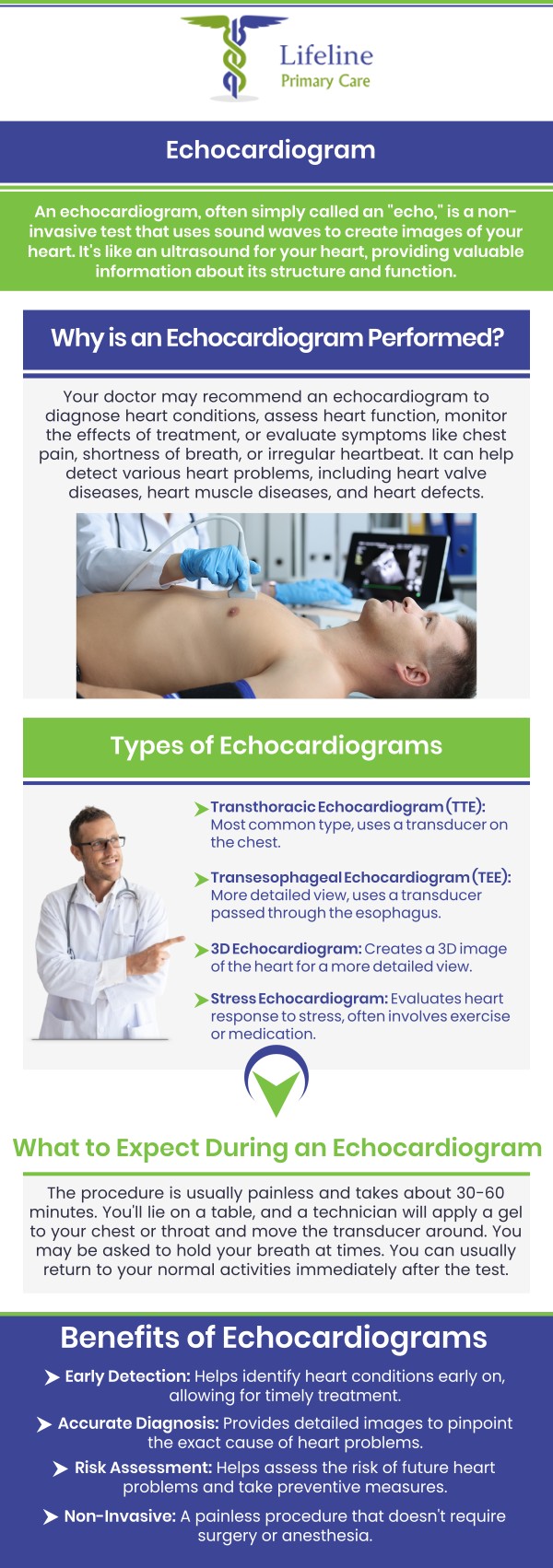
Table of Contents:
How often should I have an echocardiogram if I have a history of heart disease?
Can regular echocardiograms help monitor changes in heart function over time?
How frequently should someone with high blood pressure get an echocardiogram?
Is it necessary to get an echocardiogram if I have a family history of heart conditions?
Dr. Aziz Pirani, MD, and Dr. Safia Pirani, MD, at Lifeline Primary Care Discuss How Often You Should Have an Echocardiogram for Heart Health
At Lifeline Primary Care, we understand that every patient’s heart health needs are unique. If you have a history of heart disease, the frequency of echocardiograms—ultrasound scans of your heart—will depend on your specific diagnosis, symptoms, and overall health.
For many patients with stable heart disease and no new or worsening symptoms, we may recommend an echocardiogram every one to two years. If you have more complex conditions—such as significant valve disease, heart failure, or recent changes in your symptoms—our providers at Lifeline Primary Care may suggest more frequent imaging, sometimes every six months or sooner.
If your condition remains stable and you are not experiencing any symptoms, we may determine that you can go longer between tests. Our team will tailor your follow-up schedule to fit your individual needs and ensure the best possible care for your heart.
It’s important to contact Lifeline Primary Care right away if you notice any new symptoms, such as shortness of breath, chest pain, or swelling in your legs. These symptoms could indicate a need for a repeat echocardiogram or additional care sooner than planned.
Regular echocardiograms at Lifeline Primary Care allow our healthcare providers to closely track changes in your heart over time. These tests help us assess key factors such as heart size, wall thickness, valve function, and how efficiently your heart pumps blood. This is especially crucial for patients with existing heart conditions like cardiomyopathy, heart failure, or valve disorders, as well as those who have had cardiac procedures.
Personalized Monitoring and Early Detection
Our team recommends echocardiograms at intervals tailored to each patient’s unique needs and medical history. Ongoing monitoring helps us detect early signs of worsening heart function or new complications—even before symptoms appear. This enables us to make timely adjustments to your treatment plan and can significantly improve your long-term health outcomes.
Tracking Treatment Effectiveness
If you start a new medication or undergo a heart procedure, periodic echocardiograms can help us gauge how well your therapy is working. We use this information to fine-tune your care and ensure you’re receiving the most effective treatment possible.
The frequency of echocardiograms for patients with hypertension varies based on several factors, including the severity of your condition, your symptoms, and your previous test results. At Lifeline Primary Care, we typically recommend an echocardiogram at the time of your initial hypertension diagnosis. This helps our providers check for any effects of high blood pressure on your heart, such as thickening of the heart muscle (left ventricular hypertrophy) or other structural changes.
If your initial echocardiogram is normal and your blood pressure is well-controlled with treatment, you may not need another echocardiogram for several years. However, if you develop new symptoms—such as shortness of breath, chest pain, or signs of heart failure—or if your blood pressure becomes difficult to manage, our providers may recommend repeating the test to reassess your heart’s health.
For patients with longstanding or severe hypertension, evidence of organ damage, or a history of heart disease, we may suggest more frequent monitoring with echocardiography. Our team will always tailor recommendations to your unique health needs and risk factors.
If you have a family history of heart conditions such as cardiomyopathy, congenital heart defects, or arrhythmias, your risk for certain heart problems may be higher. However, current medical guidelines do not recommend echocardiograms for everyone with a family history unless there are specific reasons to do so.
When you visit Lifeline Primary Care, our providers will take a thorough look at your personal medical history, age, and any symptoms you may be experiencing, such as chest pain, shortness of breath, fainting, or palpitations. We’ll also consider the exact nature of your family’s heart conditions. If you have symptoms or if your relative’s condition is known to be inherited and detectable by echocardiogram (like some forms of cardiomyopathy), we may recommend this test for you. Sometimes, we may also suggest screening for close family members if the inherited condition carries a higher risk of sudden cardiac events.
If you have no symptoms, your physical exam is normal, and your family history does not involve heart conditions known to be passed down genetically, routine echocardiograms are typically not required. Instead, our team at Lifeline Primary Care will focus on regular check-ups, monitoring your blood pressure and cholesterol, and helping you maintain a heart-healthy lifestyle.
If you are concerned about your cardiac risk due to your family history, we encourage you to schedule an appointment at Lifeline Primary Care. Our experienced providers can assess your individual risk and determine if an echocardiogram or other heart tests are appropriate for you.
Dr. Aziz Pirani explains that while echocardiograms are invaluable for assessing heart conditions, routine testing is not necessary for everyone. For patients without symptoms or a history of heart disease, a baseline echocardiogram may only be recommended if specific concerns arise during a physical exam, or if significant risk factors are present, such as high blood pressure, diabetes, or a family history of cardiac disease.
Dr. Safia Pirani further notes that patients who have been diagnosed with heart-related conditions—such as heart failure, valve disorders, or cardiomyopathy—may need more frequent echocardiograms. The recommended frequency depends on the individual’s condition and their cardiologist’s advice, but often ranges from once a year to every few years. If new symptoms develop, including unexplained shortness of breath, chest pain, or palpitations, your provider might recommend an echocardiogram sooner to check for any changes in your heart’s health.
At Lifeline Primary Care, regular communication with your healthcare team ensures your heart is in good hands—every step of the way. For more information, contact us or request an appointment online. We are conveniently located at 6328 Oakwood Circle, Suite A, Norcross, GA 30093. We serve patients from Norcross GA, Tucker GA, Lilburn GA, Peachtree Corners GA, Doraville GA, Johns Creek GA, Duluth GA, and surrounding areas.
Check Out Our 5 Star Reviews


Additional Services You May Need
• Sports Physical Exam
• School Physical Exam
• X-Ray
• Foreign Body Removal
• Minor Surgeries
• Confidential STD Screening
• Allergy Testing
• Immigration Physical Exams
• IUD Insertion
• DOT Physical Exam
• Knee Gel Injections
• Chronic Care Management
• Women’s Health
• Vitamin B12 Injections
• Myers Cocktail IV Therapy
• Weight Management
• Suturing Clinic
• Incision and Drainage
• Dermatological Procedures
• Skin Tag Removal
• Toenail Removal
• Biopsies
• Lab Services
• Lead Screening
• Hormone Replacement (Pellet) Therapy
• TB Screening
• Hearing/Vision Test
• EKG Services
• Spirometry Testing
• Echocardiograms
• Ultrasounds
• ABI (Circulation Test)
• Urine Drug Testing
• Nerve Conduction Studies
• Annual Physicals
• Immunotherapy
• Neuro Scans
• Employment Physicals
• Medicare Wellness Exams
• VAT/ENG Studies
• Autonomic Nervous System Scans
• Nuclear Scans
• Acute Care
• Smoking Cessation
• Immunizations
• Joint Injections
• Vaccinations
• Covid-19 Vaccines
• Nexplanon
• Primary Care
• Flu Shot

Additional Services
You May Need
• Sports Physical Exam
• School Physical Exam
• Primary Care
• X-Ray
• Foreign Body Removal
• Minor Surgeries
• Confidential STD Screening
• Allergy Testing
• Immigration Physical Exams
• IUD Insertion
• DOT Physical Exam
• Knee Gel Injections
• Chronic Care Management
• Women’s Health
• Vitamin B12 Injections
• Myers Cocktail IV Therapy
• Weight Management
• Suturing Clinic
• Incision and Drainage
• Dermatological Procedures
• Skin Tag Removal
• Toenail Removal
• Biopsies
• Lab Services
• Lead Screening
• TB Screening
• Hearing/Vision Test
• EKG Services
• Spirometry Testing
• Echocardiograms
• Ultrasounds
• ABI (Circulation Test)
• Urine Drug Testing
• Nerve Conduction Studies
• Annual Physicals
• Immunotherapy
• Neuro Scans
• Employment Physicals
• Medicare Wellness Exams
• VAT/ENG Studies
• Autonomic Nervous System Scans
• Nuclear Scans
• Acute Care
• Smoking Cessation
• Immunizations
• Joint Injections
• Vaccinations
• Covid-19 Vaccines
• Nexplanon
• Hormone Replacement (Pellet) Therapy
• Flu Shot




 Send Text
 How May I Help You?