


Exercise After Knee Gel Injection in Lilburn Main Extension, GA: What You Need to Know
Staying active is key to joint health, but timing your physical activity correctly after a procedure is essential for optimal recovery. At Lifeline Primary Care’s Lilburn Main Extension clinic, Dr. Aziz Pirani, MD, and Dr. Safia Pirani, MD, provide tailored post-treatment care plans. The providers design specific recovery protocols that balance necessary joint rest with safe, low-impact exercise, helping you rebuild strength without compromising your results. For more information, contact us or request an appointment online. We are conveniently located at 3997 Lawrenceville Hwy NW Lilburn, GA 30047.
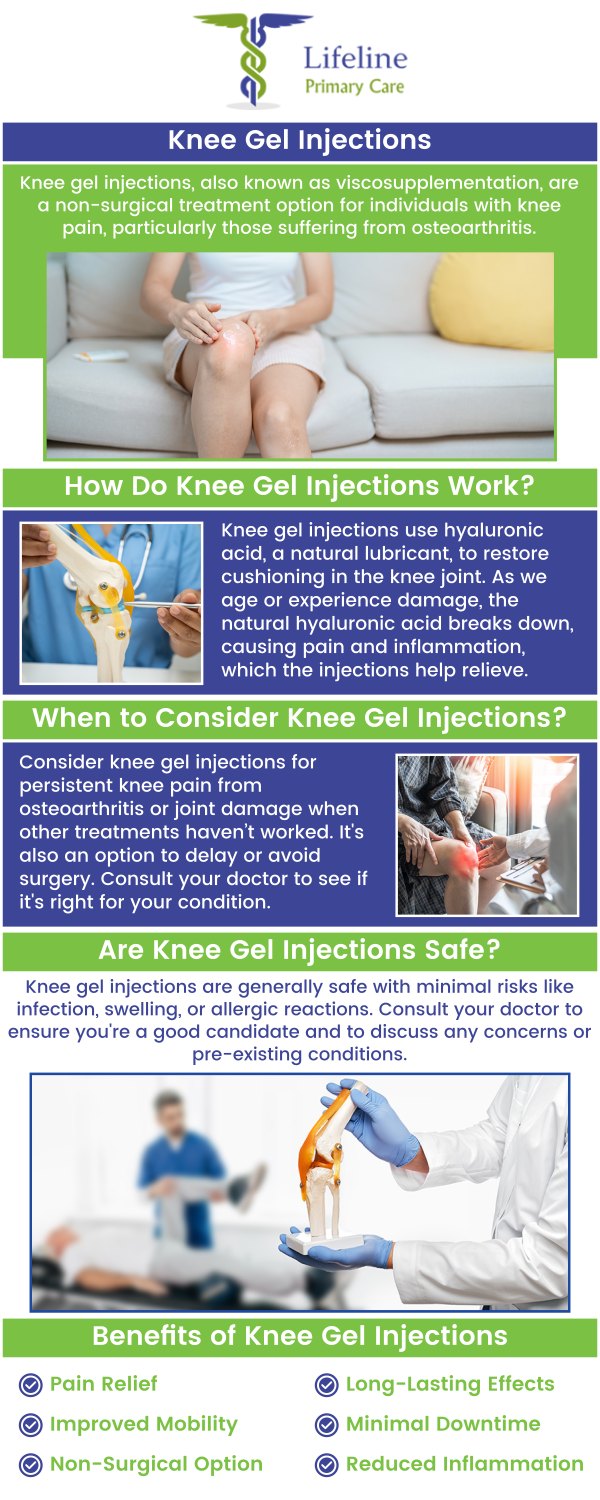
Table of Contents:
Can light exercises help with the recovery process after a knee gel injection?
How long should I wait before engaging in high-impact activities after a knee gel injection?
Is it normal to experience discomfort or swelling when exercising after a knee gel injection?
How can I safely incorporate exercise into my routine after a knee gel injection for optimal results?
How Does Lifeline Primary Care Guide Your Recovery and Exercise Routine After Knee Gel Injections?
At Lifeline Primary Care, we are committed to supporting your recovery and long-term joint health following knee gel injections. This minimally invasive procedure, which involves injecting a gel-like substance such as hyaluronic acid into the knee joint, can help relieve pain and improve mobility for patients experiencing osteoarthritis.
After your knee gel injection, our providers generally recommend resting your knee for 24 to 48 hours to allow the gel to settle effectively. Following this initial rest period and with your Lifeline provider’s approval, gentle movement and light exercises may be gradually introduced. Activities such as walking at a comfortable pace, gentle range-of-motion exercises, and basic stretching can help maintain flexibility, reduce stiffness, and prevent muscle weakening around your knee joint.
Our team will work closely with you to ensure all exercises are low-impact and appropriate for your stage of recovery. For some patients, swimming or cycling at low resistance may also be beneficial—always based on individual tolerance and guidance from your Lifeline Primary Care physician.
It’s important to avoid high-impact activities, deep squats, or movements that place excessive stress on your knee during early recovery. Each patient is unique, so we encourage you to consult your Lifeline Primary Care provider or physical therapist before starting any new exercise routine after your injection. Our personalized approach means you’ll receive recommendations tailored to your specific condition and progress.
If you have recently received a knee gel injection, it’s important to follow specific aftercare instructions to ensure the best possible outcome. These injections, which usually use hyaluronic acid, are designed to reduce knee pain and improve mobility, especially for patients with osteoarthritis.
Activity Guidelines After Your Injection
Our providers generally recommend avoiding high-impact activities—such as running, jumping, or intense sports—for at least 48 hours following your procedure. This short period of rest gives the injected gel time to settle into the joint and helps reduce the risk of inflammation, swelling, or discomfort.
Returning to Physical Activity
After the initial two days, you can gradually reintroduce low-impact activities, such as walking or gentle stretching, as tolerated. High-impact exercises should typically be postponed for one to two weeks, depending on your individual recovery and how you are feeling. Each patient’s response can vary, so it’s important to listen to your body—if you notice soreness, swelling, or pain, continue to limit your activity until these symptoms improve.
The timeline for returning to your usual activities should be discussed with your Lifeline Primary Care provider. We will consider your overall joint health, the severity of your osteoarthritis, your normal activity level, and your response to the injection when advising you on next steps. If you experience increased pain, swelling, or any unusual symptoms after resuming activity, please contact our office so we can provide further evaluation and guidance.
It is relatively common to experience some discomfort or mild swelling after exercising following a knee gel injection. Your knee may be more sensitive for a few days after the procedure, and when you return to physical activity—especially if you increase intensity or duration—you might notice temporary discomfort, stiffness, or swelling in the joint.
Most of the time, these symptoms are mild and improve with simple measures like rest, ice, and over-the-counter pain relievers. However, if you experience significant pain, persistent swelling, redness, warmth, or difficulty moving your knee, please contact Lifeline Primary Care right away, as these could be signs of infection or an adverse reaction.
To promote optimal healing and reduce the risk of complications, we recommend following your Lifeline Primary Care provider’s specific instructions regarding when and how to resume exercise after your injection.
Safely returning to exercise is an important part of your treatment plan, and our team is here to guide you every step of the way.
Immediate Aftercare:
After your knee gel injection, we recommend resting your knee for 24 to 48 hours. During this time, avoid strenuous activities and high-impact movements to allow the gel to settle and to minimize any swelling or discomfort.
Gradual Return to Activity:
Once the initial rest period has passed, you may begin gentle, low-impact exercises. Activities such as walking, swimming, or using a stationary bike are usually well-tolerated and help maintain joint mobility without putting excessive stress on your knee. Our providers advise you to monitor your knee for any pain, swelling, or instability during and after exercise. If you notice any of these symptoms, please stop the activity and contact our office for further guidance.
Rehabilitation and Strengthening:
Gentle stretching and strengthening exercises for the muscles around the knee—such as the quadriceps and hamstrings—can provide added support and stability. Our team may recommend working with a physical therapist, who can create a personalized program and ensure you are using proper technique as you regain strength and mobility.
Ongoing Precautions:
It is important to avoid high-impact activities, including running, jumping, or contact sports, until your provider confirms it is safe to resume these activities. Staying consistent with your exercise, listening to your body, and adjusting your routine as needed will help optimize the benefits of your knee gel injection and support your long-term joint health.
Personalized Care:
Remember, recovery and activity recommendations may vary from person to person. Always follow the specific instructions provided by your Lifeline Primary Care physician, and reach out to us with any questions or concerns during your recovery.
Staying active is key to joint health, but timing your physical activity correctly after a procedure is essential for the best results. At Lifeline Primary Care, Dr. Aziz Pirani, MD, Dr. Safia Pirani, MD, and their team provide expert guidance on post-treatment care at their Lilburn Main Extension clinic.
Following knee gel injections, the providers design tailored recovery protocols that balance necessary joint rest with safe, low-impact exercise. Through dedicated chronic care management and specialized joint therapies, Lifeline Primary Care ensures your knee receives the full cushioning benefits of the treatment, helping you rebuild strength and safely return to an active lifestyle.
Your health and mobility are our priorities. If you need more information or wish to schedule a follow-up, please visit Lifeline Primary Care. For more information, contact us or request an appointment online. We are conveniently located at 3997 Lawrenceville Hwy NW Lilburn, GA 30047. We serve patients from Lilburn GA, Tucker GA, Norcross GA, Lawrenceville GA, Peachtree Corners GA, Doraville GA, and surrounding cities.
Check Out Our 5 Star Reviews


Additional Services You May Need
• Sports Physical Exam
• School Physical Exam
• X-Ray
• Foreign Body Removal
• Minor Surgeries
• Confidential STD Screening
• Allergy Testing
• Immigration Physical Exams
• IUD Insertion
• DOT Physical Exam
• Knee Gel Injections
• Chronic Care Management
• Women’s Health
• Vitamin B12 Injections
• Myers Cocktail IV Therapy
• Weight Management
• Suturing Clinic
• Incision and Drainage
• Dermatological Procedures
• Skin Tag Removal
• Toenail Removal
• Biopsies
• Lab Services
• Lead Screening
• Hormone Replacement (Pellet) Therapy
• TB Screening
• Hearing/Vision Test
• EKG Services
• Spirometry Testing
• Echocardiograms
• Ultrasounds
• ABI (Circulation Test)
• Urine Drug Testing
• Nerve Conduction Studies
• Annual Physicals
• Immunotherapy
• Neuro Scans
• Employment Physicals
• Medicare Wellness Exams
• VAT/ENG Studies
• Autonomic Nervous System Scans
• Nuclear Scans
• Acute Care
• Smoking Cessation
• Immunizations
• Joint Injections
• Vaccinations
• Covid-19 Vaccines
• Nexplanon
• Primary Care
• Flu Shot

Additional Services
You May Need
• Sports Physical Exam
• School Physical Exam
• Primary Care
• X-Ray
• Foreign Body Removal
• Minor Surgeries
• Confidential STD Screening
• Allergy Testing
• Immigration Physical Exams
• IUD Insertion
• DOT Physical Exam
• Knee Gel Injections
• Chronic Care Management
• Women’s Health
• Vitamin B12 Injections
• Myers Cocktail IV Therapy
• Weight Management
• Suturing Clinic
• Incision and Drainage
• Dermatological Procedures
• Skin Tag Removal
• Toenail Removal
• Biopsies
• Lab Services
• Lead Screening
• TB Screening
• Hearing/Vision Test
• EKG Services
• Spirometry Testing
• Echocardiograms
• Ultrasounds
• ABI (Circulation Test)
• Urine Drug Testing
• Nerve Conduction Studies
• Annual Physicals
• Immunotherapy
• Neuro Scans
• Employment Physicals
• Medicare Wellness Exams
• VAT/ENG Studies
• Autonomic Nervous System Scans
• Nuclear Scans
• Acute Care
• Smoking Cessation
• Immunizations
• Joint Injections
• Vaccinations
• Covid-19 Vaccines
• Nexplanon
• Hormone Replacement (Pellet) Therapy
• Flu Shot




 Send Text
 How May I Help You?